Stablecoins settle instantly, 24/7, across borders. For treasury teams, that means less trapped cash and faster access to working capital. Below is a practical guide on how global companies can integrate stablecoins to make their treasury operations more efficient. If you’re a team evaluating stablecoins for global treasury management, get in touch with our Enterprise Team.
Stablecoins and tokenized deposits are gaining traction in corporate treasury operations.
If your company operates globally, you’re familiar with the constraints: money moves slowly across borders. A payment to a subsidiary might take days to clear. Cash collected in one region sits idle over the weekend while banks are closed. Exchange rates shift, fees accumulate, and your finance team operates on stale data.
This is where stablecoins come in, offering real-time visibility into global cash positions, instant settlement between entities, and the ability to move dollars across borders at any time of day.
How stablecoins simplify corporate treasury management
Stablecoins address a common problem: cash sitting idle offshore while waiting for correspondent banks to settle payments, particularly over weekends or through slower local payment rails.
They enable instant, 24/7 dollar-based money movement across currencies, including those poorly served by traditional correspondent banking. Some also offer yield-bearing capabilities.
Large multinational companies are already using stablecoins to move dollars between subsidiaries and offshore offices, improving cash efficiency and reducing settlement risk.
One in four CFOs expect their treasury departments to engage with cryptocurrencies within two years. The practical questions: How do stablecoins fit into existing treasury operations? And how do they align with cost, risk, and resilience frameworks?
The cost of settlement delays
For companies operating across multiple jurisdictions, correspondent banking can be complex. Treasury teams manage dozens of banking relationships, currencies, and cut-off times across time zones. This creates three problems:
- Higher borrowing costs. From trapped cash that cannot be deployed efficiently.
- Suboptimal hedging. Based on incomplete or delayed data.
- Excess bank fees. For accounts holding idle liquidity.
Despite access to real-time data elsewhere in the organization, treasury teams often rely on end-of-day reports from disconnected systems.
Some banks now offer tokenization services for instant fund movement between entities, but only within their own network. Stablecoins are used across banks and function more like cash.
Stablecoins offer 24/7, instant, global payments
Stablecoins address the core problems treasury teams face: settlement speed, visibility, and global reach. They work anywhere with internet access, allowing dollar-based treasuries to move funds between legal entities without relying on correspondent banking windows.
Faster settlement unlocks working capital
Stablecoins settle 24/7/365 with T+0 finality. This simplifies cash flow forecasting, reduces counterparty risk, and allows working capital to be redeployed immediately.
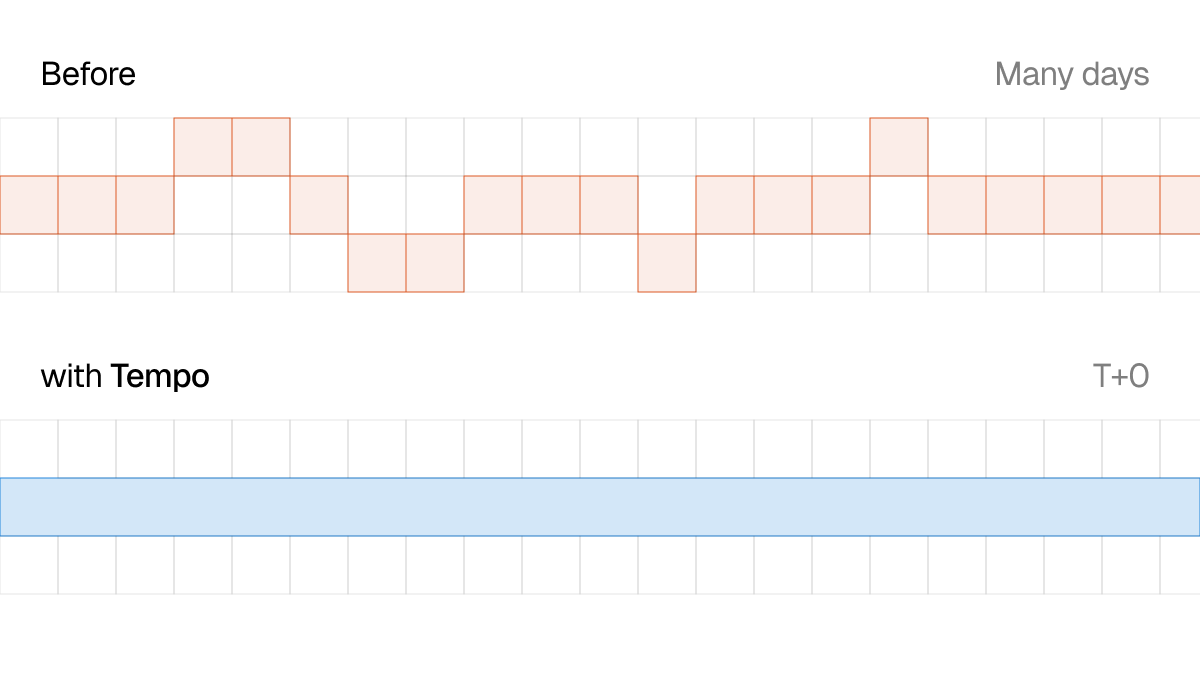
Onchain settlement simplifies reconciliation
For onchain transactions, payment and settlement occur as a single event. This creates a transparent audit trail and enables automated reconciliation, replacing manual processes.

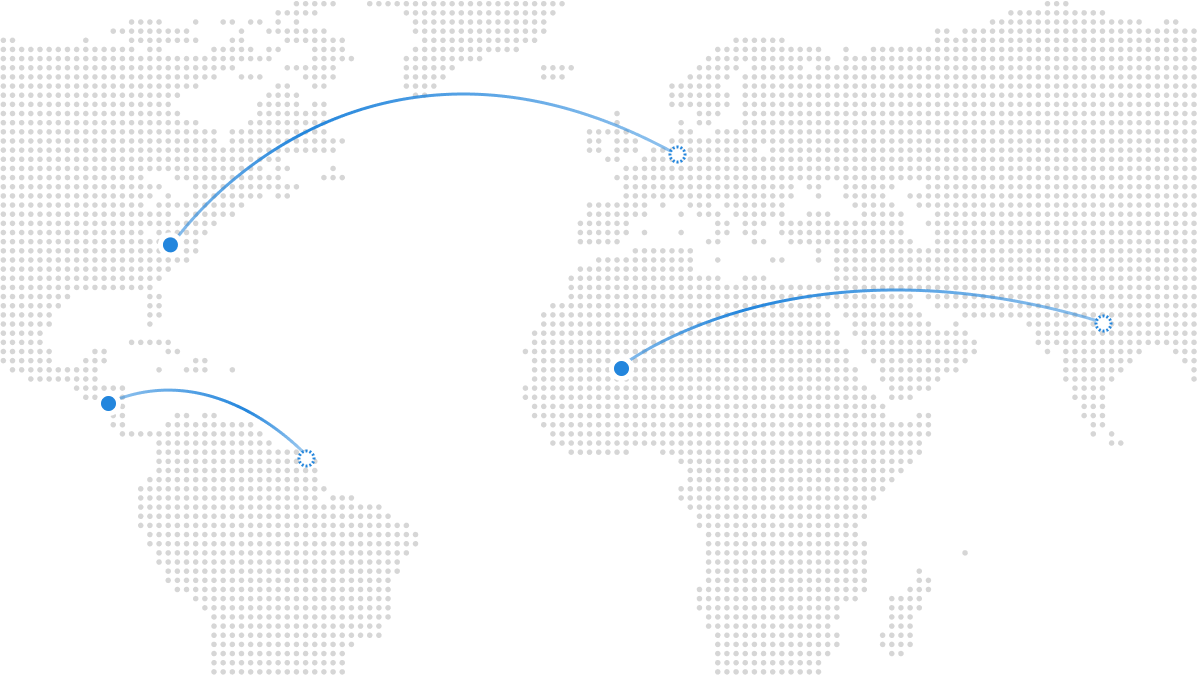
Available in underserved markets
Correspondent banking works well for G20 currencies. Stablecoins add the most value for businesses operating in currencies with limited banking infrastructure.
How stablecoins fit into treasury operations
Intercompany settlements
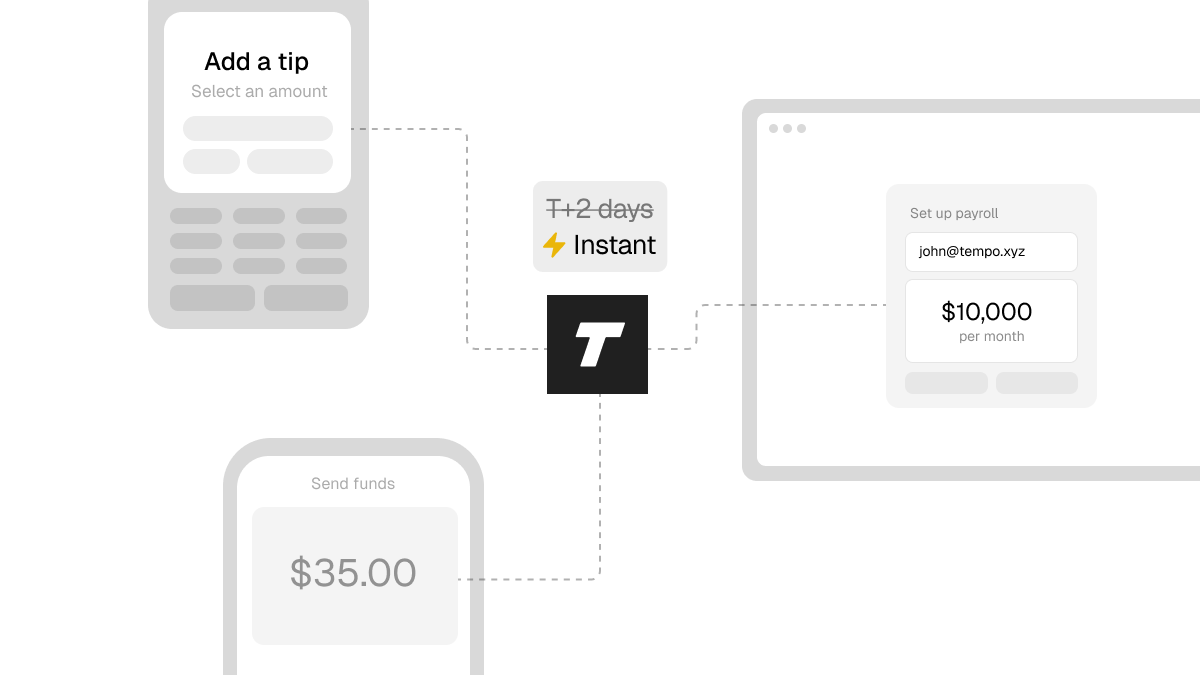
Stablecoins enable real-time settlement between parent companies and subsidiaries, or between subsidiaries. Instead of initiating SWIFT transfers, treasury teams move stablecoins between entities and settle against bank accounts on their own schedule.
Cash positioning & forecasting
Stablecoins provide real-time visibility into global cash positions. Treasury teams can see liquidity across all entities regardless of time zone or banking hours, replacing end-of-day reports with current data for forecasting and liquidity management.

International payouts
Stablecoins reduce the complexity of international payouts by bypassing correspondent banks and FX conversions. This is useful for high-volume, low-value payments or payouts to regions with limited banking infrastructure. Recipients can receive stablecoins directly, or providers can convert to local currency so the stablecoin leg is invisible to the recipient.

Current limitations
Stablecoins complement bank accounts rather than replace them. Key considerations:
- Limited non-USD liquidity. Stablecoins are predominantly dollar-denominated. EUR, GBP, and other major currency liquidity remains limited.
- Off-ramping constraints. Off-ramping to bank accounts is not available in all markets, though coverage is expanding.
- Custody complexity. Treasury teams must choose between self-custody and institutional custody, with implications for multi-signature controls, insurance, and internal governance.
- Limited systems integrations. Some blockchains require custom integration with treasury systems. Provider and network selection can simplify this.
- Operational risk varies. Risk profiles differ by asset and network. Stablecoins backed 1:1 by US Treasuries and repo have lower risk profiles. Most major blockchains maintain high uptime.
Reconciliation & operational risk considerations
Beyond speed and cost, treasury teams must evaluate how new settlement rails affect reconciliation processes and operational risk:
Automated GL reconciliation
Fast settlement has limited value if transactions do not post to the General Ledger. Unlike SWIFT ISO 20022 messages, many blockchains lack native GL integration. Standards like Tempo’s TIP-20 allow invoice IDs or GL codes to be embedded in transaction metadata. Funds settle and reconcile in the ERP automatically, eliminating unallocated cash.
Managing operational risk
Adding operational risk to working capital flows is not acceptable. Instead, start with a contained use case that delivers clear value (such as moving working capital in non-G20 currencies over weekends), then expand to other operations like short-term instrument allocation.
Controls & auditability
Faster rails can weaken traditional approval and audit controls if implemented poorly. The mitigation is to enforce policy at the transaction layer, using programmable approvals and role-based permissions, so each movement of funds is pre-approved, attributable, and auditable end-to-end.
For multinational companies, stablecoins can deliver value now. The right provider, network, and implementation depend on your specific requirements.
Key questions to answer
Before engaging providers, answer these questions:
- What problem are you solving? Identify your highest-value use case: reducing FX costs, accelerating intercompany transfers, or improving cash visibility in specific regions.
- Use existing stablecoins or issue your own? USDC and USDT are liquid and widely accepted for off-ramping. Issuing your own stablecoin allows you to move value between entities while maintaining yield, without converting to money market funds.
- Manage internally or via third party? Wallet setup, custody, and liquidity provider integration can be complex, so many companies outsource to infrastructure providers like Bridge, BVNK, or ZeroHash. Some, like Ant Group, build in-house.
By answering these questions, you’ll be ready to define the value more clearly and begin to meet providers.
Getting started
Immediate actions
The future of corporate treasury is instant, global, and efficient, but getting there requires a methodical approach that fits your organization:
- Assess pain points. Identify where cash is trapped, which corridors have the highest fees, and where settlement delays create the most friction.
- Build a business case. Map current costs against projected savings using your actual transaction data.
- Talk to peers. Other CFOs in your industry are evaluating stablecoins. Learn from their experience.
- Engage infrastructure providers. Request demos. Understand custody models, compliance tooling, and integration requirements.
Work with Tempo
Our enterprise team can help you navigate the prospect of integrating stablecoins into your corporate treasury operations:
- Analyze your treasury operations to identify high-value use cases
- Model the business case with your transaction data
- Review integration requirements for your tech stack
- Design a pilot program tailored to your operational needs
- Connect you with companies that have implemented stablecoin treasury operations
Please get in touch with us if you’d like to explore this use case with our financial services consulting and product teams.
Frequently Asked Questions
Do I have to hold and manage stablecoins?
No. You can use stablecoins purely as a settlement rail without holding balances directly. Third parties can manage the stablecoins outside your organization, while your existing bank relationships remain central to day-to-day operations. Over time, you may choose to hold stablecoins directly and expand into other onchain assets such as tokenized treasuries.
Will my bank support this?
Many banks are actively developing stablecoin and tokenized deposit capabilities, and many more are planning to launch through the coming year. In the meantime, infrastructure providers such as Bridge and BVNK enable seamless movement between traditional bank accounts and stablecoins.
Who do I need to integrate with?
There are two common approaches. In a buy model, a provider manages licensing, custody, wallets, and blockchain connectivity, so you may never interact with stablecoins directly. In a build model, you integrate directly with custodians, wallet providers, and blockchain networks. The right choice depends on your timeline, internal resources, and how much control you need. View Tempo’s infrastructure partners for opportunities to integrate.
What about regulatory and audit concerns?
Any treasury implementation must meet regulatory expectations and withstand internal and external audit scrutiny.
- Regulatory status. In the US, the GENIUS Act provides a federal framework. The EU’s MiCA regulations are in force. The UAE and Singapore have established frameworks, and many jurisdictions expect to publish theirs in the coming year.
- Audit trail. Onchain transactions are permanently recorded with timestamps and cryptographic proof.
- Compliance. Work with providers offering transaction monitoring, sanctions screening, and AML tools for blockchain.
- External auditor comfort. Major issuers like Circle (USDC) and Paxos (USDP) publish monthly attestations. Stablecoin-as-a-service providers like Agora, Bridge, and M0 offer similar capabilities for custom issuance.
What are the risk considerations?
The primary risks associated with stablecoin-based treasury flows fall into three categories:
- Counterparty risk. Stablecoin issuer solvency and infrastructure provider stability. Mitigation: Stablecoins backed 1:1 by HQLA under regulatory frameworks like GENIUS represent lower risk.
- Operational risk. Variable fee structures and network performance across blockchains. Mitigation: Select providers offering fee consistency and evaluate reliability alongside speed.
- Regulatory risk. Potential restrictions in certain jurisdictions. Mitigation: Start with dollar-based movements between your own entities before expanding to external use cases.
How does this integrate with our ERP/TMS?
Most TMS platforms (e.g. Kyriba, TreasuryXpress, GTreasury) support native integrations or API connections. A typical flow would look like this:
- Payment instruction originates in ERP/TMS
- Instruction routes to a stablecoin infrastructure provider
- Settlement occurs on-chain
- Confirmation and settlement data flows back to TMS
- Accounting entries are generated automatically
Tempo offers ISO 20022-compatible messaging, simplifying integration for teams already working with SWIFT MT messages.