

Zone Bridging
Tempo Zones use Tempo-centric bridging for cross-chain operations: deposits flow from Tempo into a zone, and withdrawals flow from a zone back to Tempo with optional callbacks for composability.
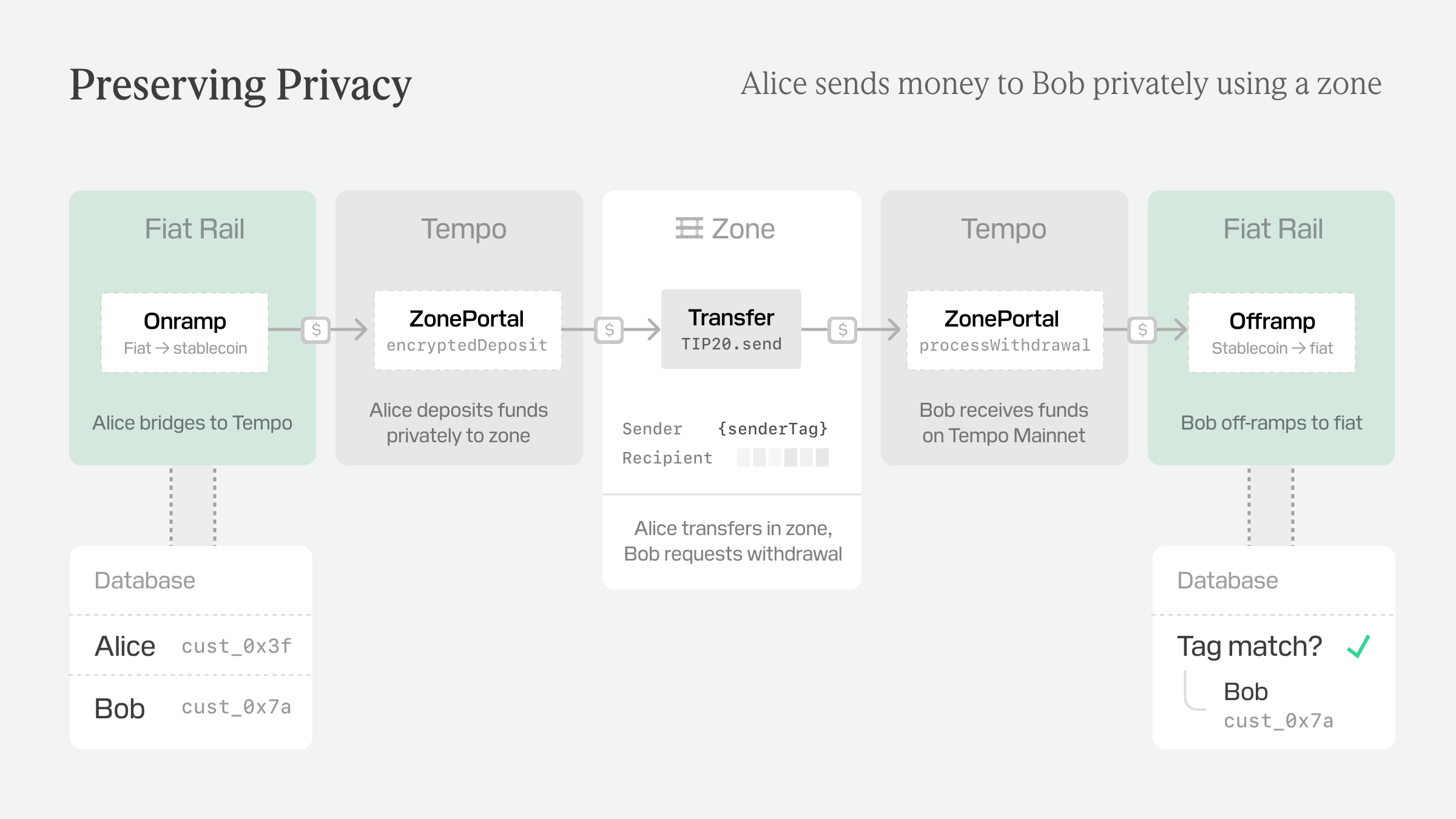
Above is an example of the type of complex transaction that can remain privacy-preserving via Tempo Zones, while performing operations such as bridging, deposits & sends, and withdrawals. Learn more about encrypted deposits and verifiable withdrawals below.
Deposits (Tempo → Zone)
- User calls
ZonePortal.deposit(token, to, amount, memo)on Tempo, specifying which enabled TIP-20 to deposit. - The Zone Portal contract validates the token is enabled and deposits are active, deducts the deposit fee, locks the funds, and appends a deposit to the queue.
- The sequencer observes
DepositMadeevents and processes deposits in order viaZoneInbox.advanceTempo(), minting the corresponding zone-side TIP-20 to the recipient. - A batch proof must prove the zone correctly processed deposits by validating the Tempo state read inside the proof.
Encrypted Deposits
For privacy-sensitive use cases, users can make encrypted deposits where the recipient and memo are encrypted using the sequencer's public key. Only the sequencer can decrypt and credit the correct recipient on the zone.
What's public vs. private:
| Field | Visibility | Reason |
|---|---|---|
token | Public | Needed for locked token accounting |
sender | Public | Needed for potential refunds if decryption fails |
amount | Public | Needed for onchain locked token accounting |
to | Encrypted | Only sequencer knows recipient |
memo | Encrypted | Only sequencer knows payment context |
The encryption uses ECIES with secp256k1:
- Sequencer publishes a secp256k1 encryption public key via
setSequencerEncryptionKey()with a proof of possession. - User generates an ephemeral keypair and derives a shared secret via ECDH.
- User encrypts
(to || memo)with AES-256-GCM using the derived key. - User calls
depositEncrypted(token, amount, keyIndex, encryptedPayload)on the Zone Portal contract.
If decryption fails (invalid ciphertext, wrong key), the zone mints tokens to the sender's address on the zone. The Tempo Mainnet funds remain locked in the Zone Portal contract. This ensures chain progress is never blocked by invalid encrypted deposits.
Withdrawals (Zone → Tempo)
Users withdraw by creating a withdrawal request on the zone. Withdrawals are processed in two steps:
- Batch submission. The sequencer calls
finalizeWithdrawalBatch()at the end of the final block in a batch. This constructs the withdrawal hash chain and writes thewithdrawalQueueHashandwithdrawalBatchIndexto state. The proof validates this state and adds withdrawals to Tempo's queue. - Withdrawal processing. The sequencer calls
processWithdrawal()on Tempo to process withdrawals from the queue's oldest slot.
Composable Withdrawals
Withdrawals support callbacks to Tempo contracts via the ZoneMessenger. When gasLimit > 0, the messenger:
- Transfers tokens from the Zone Portal contract to the target via
transferFrom. - Calls the target with the provided
callbackData.
Both operations are atomic. If the callback reverts, the transfer reverts too. Receiving contracts implement IWithdrawalReceiver and verify msg.sender == zoneMessenger to authenticate calls. This enables direct composition with DEX swaps, staking, or cross-zone deposits.
interface IWithdrawalReceiver {
    function onWithdrawalReceived(
        bytes32 senderTag,
        address token,
        uint128 amount,
        bytes calldata callbackData
    ) external returns (bytes4);
}
Withdrawal Failure and Bounce-Back
Withdrawals can fail if the token transfer or callback reverts (out of gas, TIP-403 policy, token pause, etc.). When a withdrawal fails, the Zone Portal contract bounces back the funds by re-depositing into the same zone to the withdrawal's fallbackRecipient:
- The withdrawal is popped unconditionally from the queue, even on failure.
- A new deposit is enqueued for the
fallbackRecipienton the zone. - The sequencer keeps the processing fee regardless of success or failure.
This ensures failed withdrawals never block the queue and users always retain their funds.
Verifiable Withdrawals
Zone transactions are private: transaction data is not published on Tempo Mainnet. To protect sender privacy during withdrawal processing on Tempo Mainnet, the plaintext sender is replaced with a commitment:
senderTag = keccak256(abi.encodePacked(sender, txHash))
The txHash acts as a blinding factor known only to the sender and sequencer. The sender can selectively disclose their identity by revealing txHash to any party, who verifies it against the senderTag.
For automated disclosure, the sender can specify a revealTo public key. The sequencer encrypts (sender, txHash) to that key using ECDH, populating the encryptedSender field in the Tempo Mainnet-facing withdrawal struct. This enables cross-zone transfers where the destination zone's sequencer can automatically attribute incoming deposits.
Was this helpful?