Stablecoins help neobanks launch new products, reach new customer segments, and expand into new markets. Many build on Tempo for predictable costs, built-in compliance, and a growing ecosystem of 60+ partners. If you want to explore this for your company, get in touch with our Enterprise team.
Neobanks won customers and market share with better mobile apps, faster onboarding, and lower fees, but the infrastructure they’re built on did not change. Cross-border payments still rely on correspondent banking, offering yield still depends on partner banks, and expansion still means more licenses, new integrations, and months of work.
Stablecoins and onchain infrastructure remove these constraints. Neobanks move money globally with stablecoins, offer yield through tokenized funds, and enter new markets through self-custodial wallets without having to secure a banking partner in each market.
For neobanks ready to capture this opportunity, Tempo offers three ways to get started. Each builds on the last and brings you closer to the products your customers expect.
Offer cross-border payments
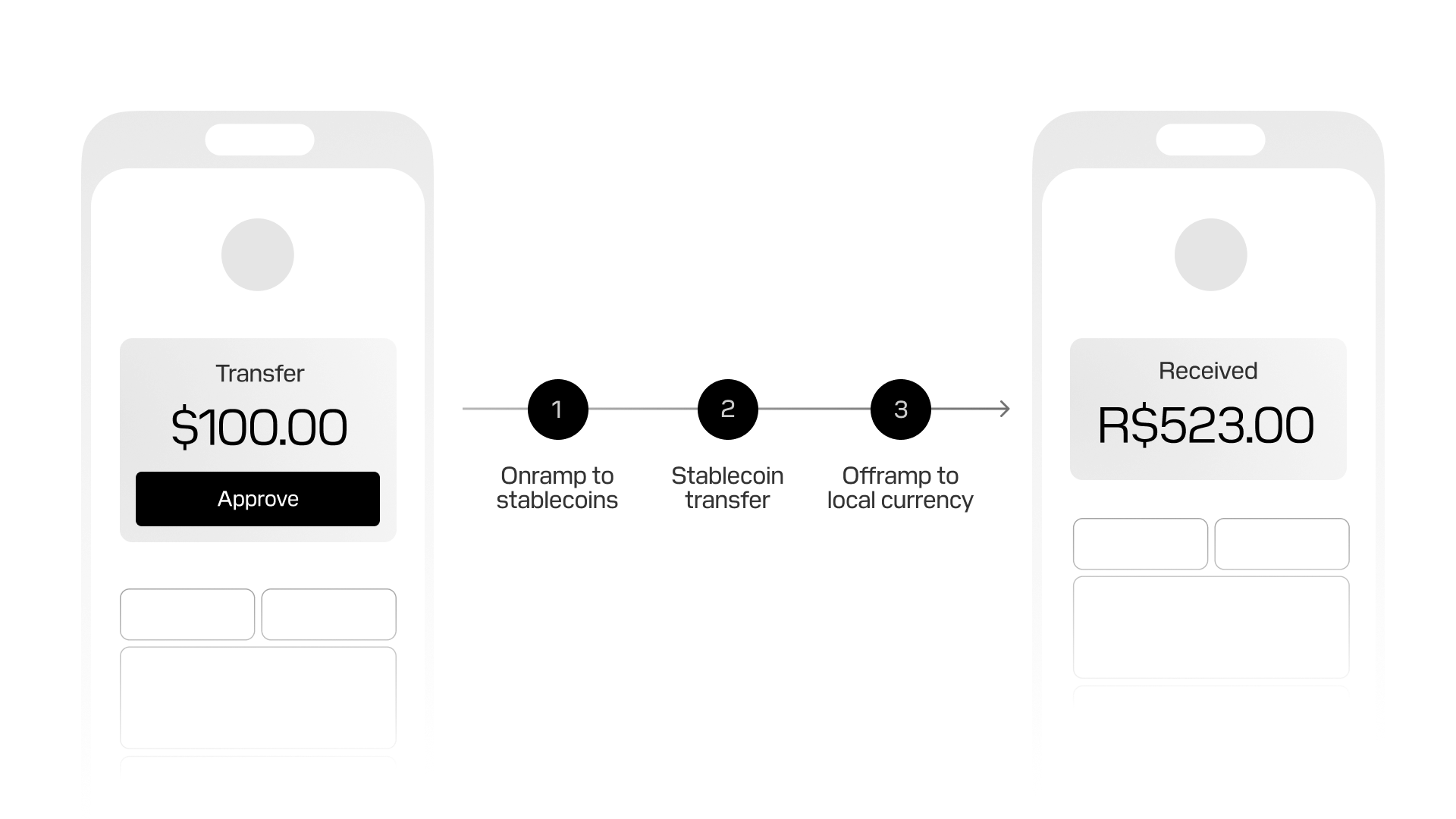
Every time a customer leaves your app to send money abroad, you lose them. They move funds out, pay someone else’s fees, and often don’t come back. Stablecoins enable near-instant cross-border payments at costs competitive with specialized remittance services.
Cross-border payments with stablecoins involve three steps: funds are converted to stablecoins, sent onchain, and paid out locally through partners into bank accounts or wallets. Expanding to new corridors primarily involves finding new offramps, which is generally simpler than securing new banking relationships.
A neobank running this model has very different unit economics from one relying on correspondent banks, and customers no longer need to leave your app to send money abroad.
Embed stablecoin wallets
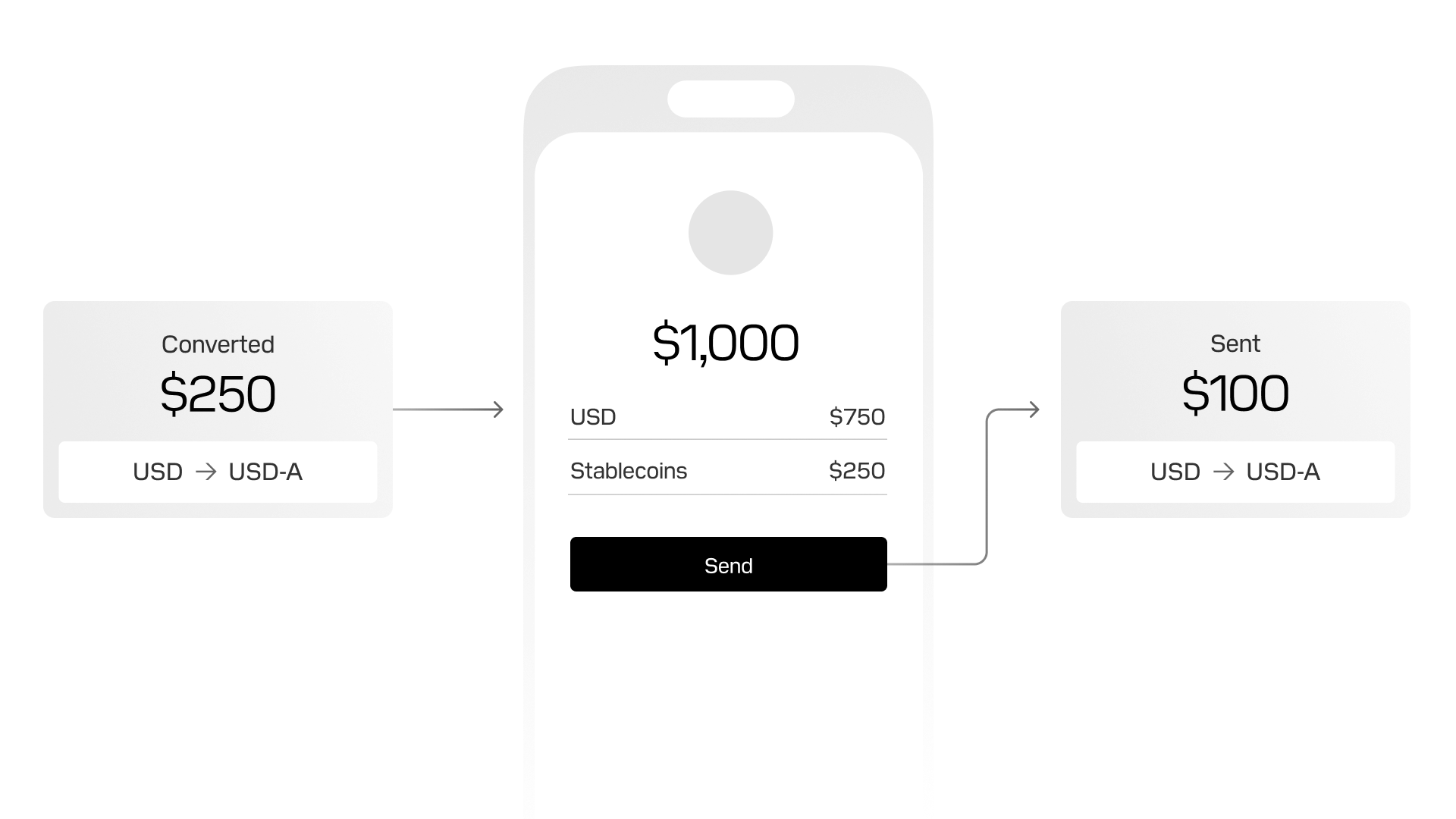
An existing neobank can add custodial stablecoin accounts alongside its core product. Users onramp and offramp, send and receive stablecoins, while you retain full control over compliance and regulatory requirements.
Instead of losing customers to standalone crypto wallets, you offer the same functionality natively. Users hold dollar-denominated stablecoins, convert when they choose, and transact globally from the same place they manage their fiat accounts. This is especially relevant for companies paying international contractors and employees working for global companies.
Stablecoin wallets sit alongside existing accounts, with partners handling key management, security, and transaction infrastructure.
Expand to new markets
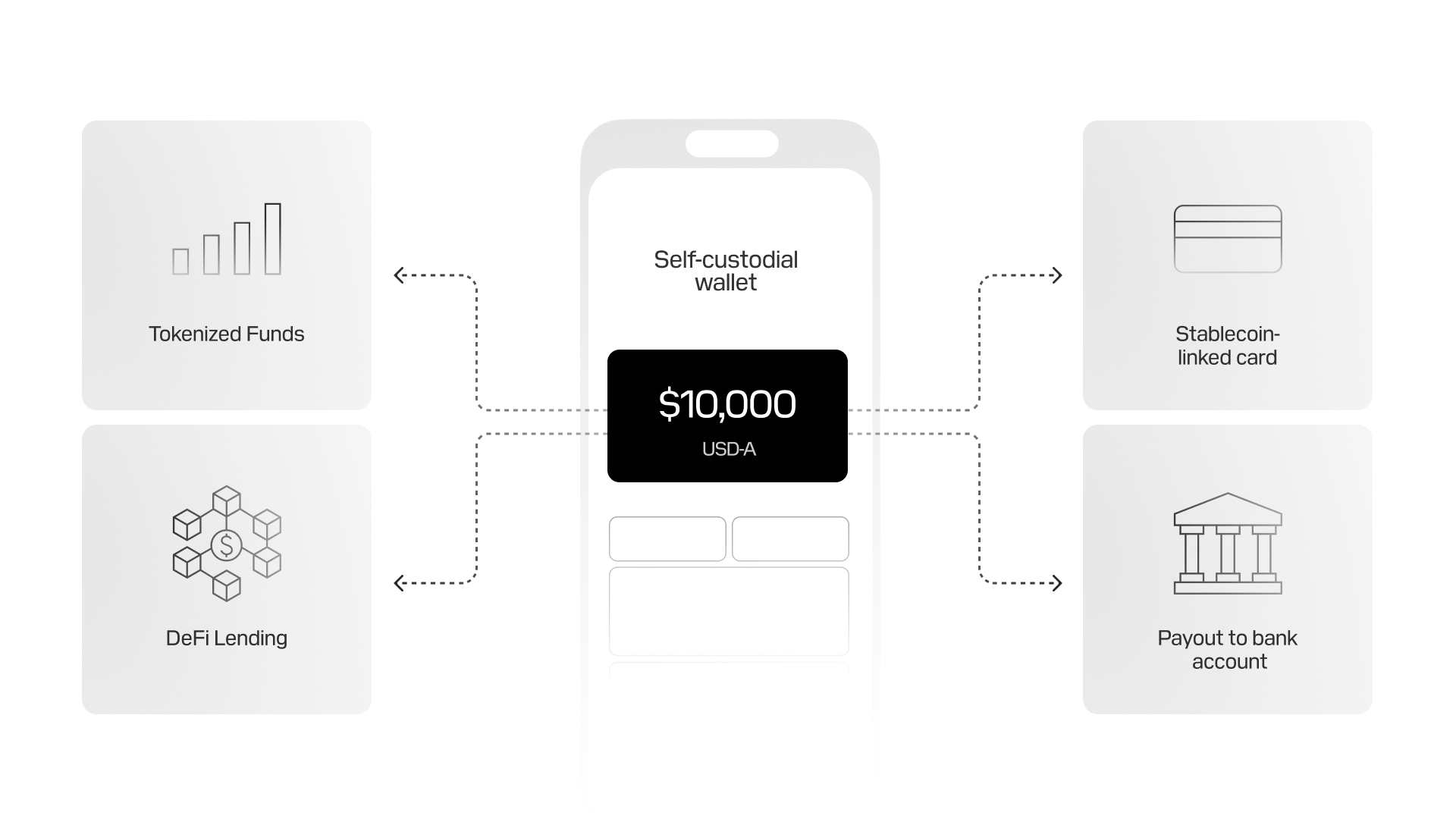
Self-custodial wallets let neobanks enter new markets without setting up local banking relationships or navigating full licensing in every jurisdiction. Your app can support payments, on and offramps, cards, savings, and lending without custodying funds.
This changes the regulatory setup. Non-custodial products can face lighter requirements than deposit-taking models, leading to faster expansion, though in some jurisdictions these still require licensing.
The same wallet infrastructure supports multiple products, from cards for spending stablecoins at the point of sale to tokenized funds and lending. This path requires more investment, but the economics are stronger, with recurring revenue across multiple products rather than one-off fees.
What to evaluate before building
Before building, evaluate where the opportunity is real and what it will take to support it.
- Is there real demand? If customers are sending money to remittance services, this signals cross-border payment demand. If they are using exchanges or onramps, this signals demand for embedded wallets. Survey your customers to validate this.
- What are the regulatory constraints? Requirements differ by country. Some require licensing even for self-custodial wallets, while others restrict or ban stablecoins. This determines which products you can offer and where.
- Do you have the right partners? Understand your target markets and corridors. This will shape your choice of partners, as their capabilities vary by geography, coverage, and product scope.
- Build or partner? Start with partners to move faster, especially for components that require licenses, such as onramps, custody, and payouts. Consider building in-house where licensing is not required and where it creates differentiation or improves unit economics.
The choice of partners and regulatory constraints will shape what you can launch and how quickly you can scale.
Why neobanks build on Tempo
Tempo provides many of the core capabilities you need out of the box, with a growing partner ecosystem to cover the remaining gaps. This is why many neobanks are already building on Tempo. Tempo offers:
- Predictable fees. Tempo provides low, predictable fees paid in stablecoins. Transactions cost fractions of a cent, with no separate gas token or price spikes during congestion. There is no account rent, and account creation is effectively free at scale.
- Privacy. Tempo supports privacy where it matters. Balances and transaction flows can remain private while still being auditable for compliance and regulatory requirements.
- Compliance. Compliance runs at the protocol level. Policy controls such as whitelist and blacklist enforcement and transfer restrictions are built directly into account and token operations, with additional monitoring and screening supported through partners.
- User Experience. Smart accounts enable passkey authentication, gas sponsorship, batch transactions, and scheduled payments. Users sign in with biometrics instead of managing seed phrases or transaction fees.
- Partners. The ecosystem fills in the rest. Wallet infrastructure, stablecoin issuance, payments orchestration, cards, and tokenized funds are available through partners, reducing the need to build each component internally.
Work with Tempo
Tempo works with neobanks to evaluate the opportunity and implement stablecoin products, from initial analysis through pilot and scale.
- Identify which path fits your business, from cross-border payments to wallets and new market expansion
- Analyze your transaction flows to identify high-impact corridors and use cases
- Model the business case using your volumes, pricing, and unit economics
- Review integration requirements for your existing stack
- Design a pilot tailored to your highest-impact use case
- Connect with partners for wallets, payments, cards, and compliance
If you want to explore how this could work for your company, get in touch with our Enterprise team.
Frequently Asked Questions
What problem do stablecoins solve for neobanks?
They remove three constraints. Dependence on correspondent banks for cross-border payments, reliance on external apps for stablecoin access, and the need for local banking partners when entering new markets.
Do I need a banking partner in every country?
No. Stablecoin rails and local payout partners remove the need for direct banking relationships in each market. You may still choose to partner with a bank or fintech to support onramping and offramping.
Can I keep compliance under control?
Yes. Policy controls such as whitelists, blacklists, and transfer rules can be enforced at the protocol level, with additional monitoring via partners.
Should I choose custodial or self-custodial wallets?
Custodial gives you control over UX and compliance. Self-custodial reduces regulatory burden and speeds up market entry, but shifts control to the user.
Is regulatory approval required?
Depends on jurisdiction and product. Some require licenses even for non-custodial setups, others restrict stablecoins entirely.
Should I build or partner?
Start with partners for licensed components like custody, onramps, and payouts. Build in-house where it improves unit economics or differentiation.
How do I get started?
Define target markets and use cases, assess regulatory constraints, then run a pilot with selected partners before scaling. Get in touch with our Enterprise team to get started.